
Styling Tips
How to Clean Sterling Silver Jewellery at Home
Jul
How to Clean and Care for 925 Sterling Silver Jewellery at Home
Your 925 sterling silver jewellery is designed to last for years, but like any precious metal, it needs a little care to keep its shine. Over time, you may notice your favourite pieces looking dull or developing a darker finish. This is completely normal and happens because sterling silver naturally reacts with air, moisture, and everyday substances such as perfume, sweat, and skincare products.
The good news is that restoring its brilliance doesn’t require expensive cleaning products or professional equipment. With a few household essentials and the right cleaning techniques, you can safely remove tarnish, protect the finish, and keep your jewellery looking beautiful for years to come.
In this guide, you’ll learn why sterling silver tarnishes, the safest ways to clean it at home, how to store it correctly, and the common mistakes to avoid. Whether you’ve recently purchased your first piece or have been wearing sterling silver for years, these practical tips will help you maintain its beauty with confidence.
If you’re looking for genuine sterling silver pieces that combine timeless style with everyday durability, explore the latest collections at Jilan Gold, where quality craftsmanship meets modern design.
Why Does Sterling Silver Tarnish?
One of the biggest misconceptions about sterling silver is that tarnishing means the jewellery is damaged or of poor quality. In reality, tarnish is a completely natural process and is a sign that your jewellery contains genuine sterling silver. The good news is that it only affects the surface and can be removed with proper cleaning.
Sterling silver is made from 92.5% pure silver and 7.5% other metals, most commonly copper. Pure silver is naturally soft, so copper is added to make the jewellery stronger and more suitable for everyday wear. Over time, the copper reacts with oxygen, moisture, and sulfur compounds in the air, creating a dark layer known as tarnish.
Environmental conditions and daily habits can also speed up this process. Living in a humid climate, wearing jewellery while exercising, or exposing it to cosmetics and household chemicals can all cause tarnish to develop more quickly. Fortunately, regular cleaning and proper storage make it easy to restore your jewellery’s original shine.
Common Causes of Tarnish
- High humidity and moisture in the air.
- Exposure to perfumes, deodorants, lotions, and hairspray.
- Natural body oils and perspiration.
- Swimming pools and chlorinated water.
- Household cleaning products containing harsh chemicals.
- Improper storage in damp or open environments.
- Dust and pollution accumulating over time.
Tarnish is a normal part of owning sterling silver, but it doesn’t have to be permanent. With the right cleaning methods and a few simple care habits, you can keep your jewellery looking bright, polished, and ready to wear every day.
What You’ll Need to Clean Sterling Silver Jewellery
Before you begin cleaning your jewellery, gather a few basic household items. You don’t need expensive cleaning kits or specialised tools. In fact, some of the safest and most effective cleaning methods use products that are probably already in your home.
Using the right materials is important because harsh brushes, abrasive powders, and strong chemicals can leave scratches or damage the finish. Gentle cleaning not only removes dirt and tarnish but also helps preserve the shine of your jewellery for years.
Essential Cleaning Supplies
- Mild dish soap
- Warm water
- A soft-bristled toothbrush
- A microfibre or lint-free polishing cloth
- Baking soda
- Aluminium foil
- A glass or ceramic bowl
If your jewellery contains pearls, opals, turquoise, or other delicate gemstones, stick to mild soap and warm water. Strong cleaning methods and abrasive materials may damage softer stones or loosen their settings.
Once you have everything ready, you can choose the cleaning method that best suits the condition of your jewellery. For regular maintenance, a simple soap-and-water wash is usually all that’s needed, while heavier tarnish may require a deeper clean.
Method 1: Clean Sterling Silver with Soap and Warm Water
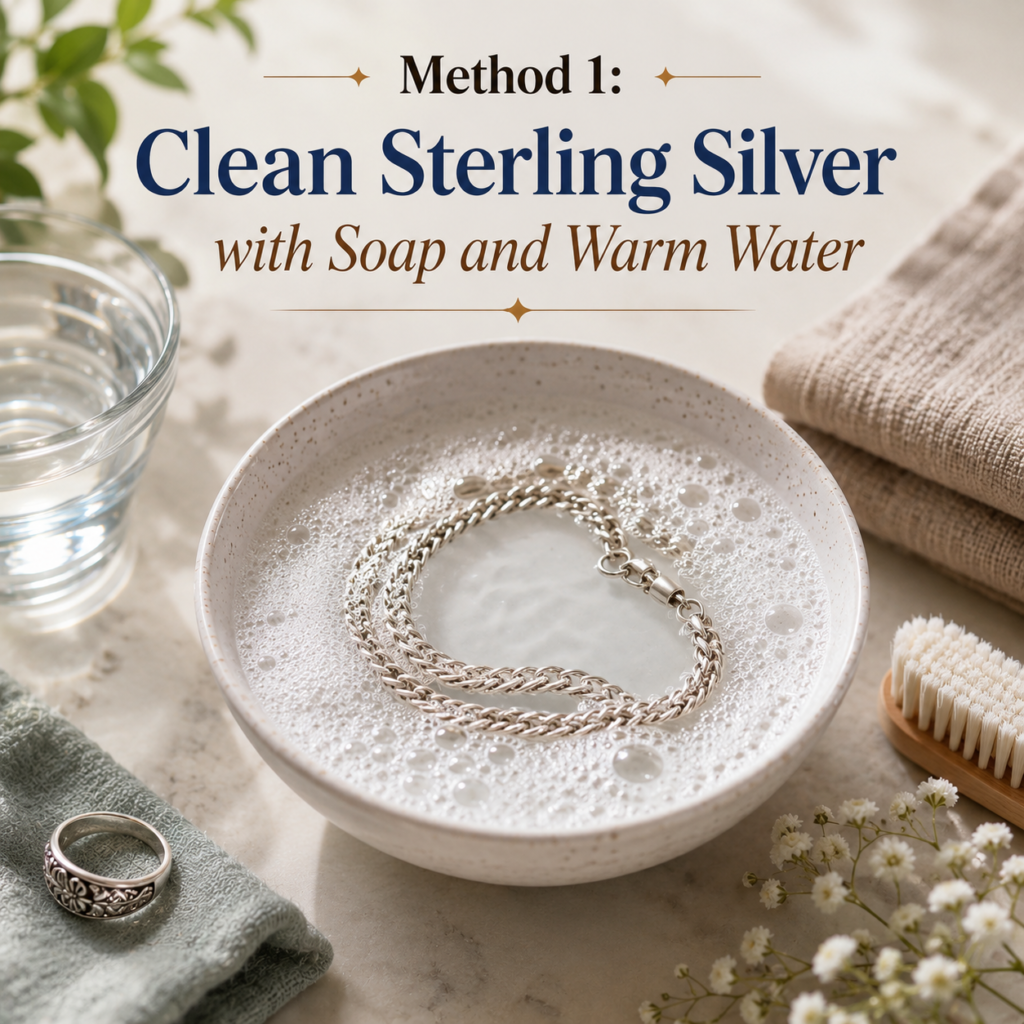
For everyday cleaning, mild dish soap and warm water are all you need. This is the safest method for removing dirt, oils, and light tarnish without affecting the finish of your jewellery. It’s gentle enough for regular use and helps maintain the natural shine of sterling silver.
This cleaning method works especially well for silver rings, as they come into contact with hand soap, lotions, sanitiser, and other products throughout the day. Regular cleaning prevents residue from building up around the band and any stone settings.
How to Clean Your Jewellery
- Fill a small bowl with warm water and add a few drops of mild dish soap.
- Place the jewellery in the solution and leave it to soak for 5 to 10 minutes.
- Use a soft-bristled toothbrush to gently clean detailed areas where dirt may collect.
- Rinse thoroughly under clean water to remove any soap residue.
- Pat the jewellery dry with a soft microfibre cloth and allow it to air dry completely before storing it.
Helpful Tips
- Use gentle pressure while brushing to avoid scratching the surface.
- Clean your jewellery every two to four weeks if you wear it regularly.
- Always make sure the jewellery is completely dry before putting it away.
- A quick wipe with a soft cloth after each wear helps reduce the build-up of oils and dust.
Regular cleaning takes only a few minutes and helps preserve the beauty of your jewellery. Making it part of your routine is one of the easiest ways to keep sterling silver looking bright and polished throughout the year.
Method 2: Remove Stubborn Tarnish with Baking Soda
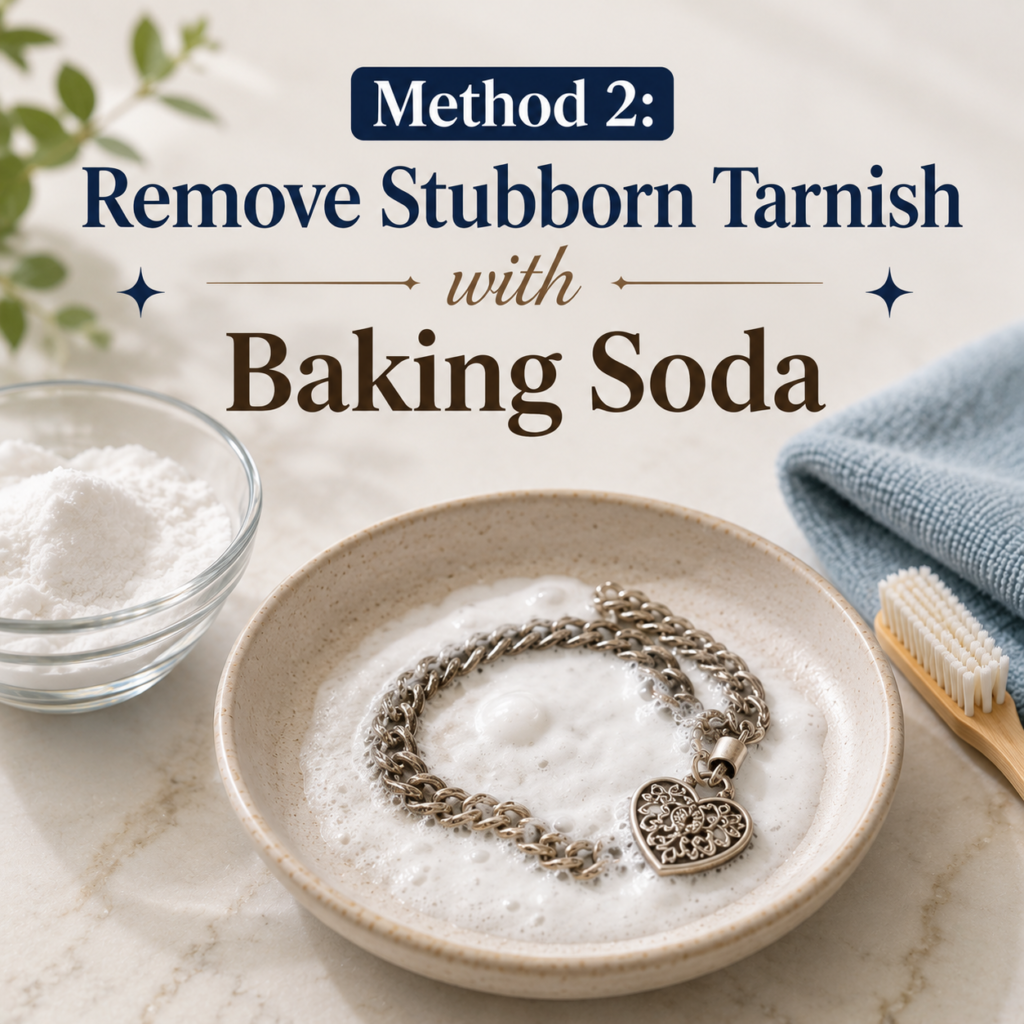
If your sterling silver jewellery has developed noticeable black or dull patches, a baking soda paste can help restore its shine. This method is more effective than soap and water for removing stubborn tarnish, but it should only be used occasionally rather than as part of your regular cleaning routine.
Baking soda is mildly abrasive, so it’s important to clean gently. Applying too much pressure can leave fine scratches on the surface, especially on jewellery with a polished finish.
Steps to Clean Sterling Silver with Baking Soda
- Mix two tablespoons of baking soda with a small amount of water to form a smooth paste.
- Apply the paste to tarnished areas using a soft cloth or a soft-bristled toothbrush.
- Gently rub the jewellery in small circular motions without pressing too hard.
- Leave the paste on heavily tarnished areas for two to three minutes.
- Rinse thoroughly with clean water.
- Dry the jewellery completely with a soft microfibre cloth before polishing lightly.
When Not to Use This Method
Although baking soda is effective for plain sterling silver, it isn’t suitable for every type of jewellery. Avoid using this method on oxidised silver jewellery, as it can remove the intentionally dark finish that gives these pieces their unique appearance.
- Avoid using baking soda on jewellery with pearls, opals, turquoise, or other delicate gemstones.
- If you’re unsure about a piece, choose the mild soap and water method instead.
- Always test any cleaning method on a small area if the jewellery has intricate detailing.
For most jewellery, baking soda works well when used carefully and only when needed. Gentle cleaning will always give better long-term results than aggressive scrubbing.
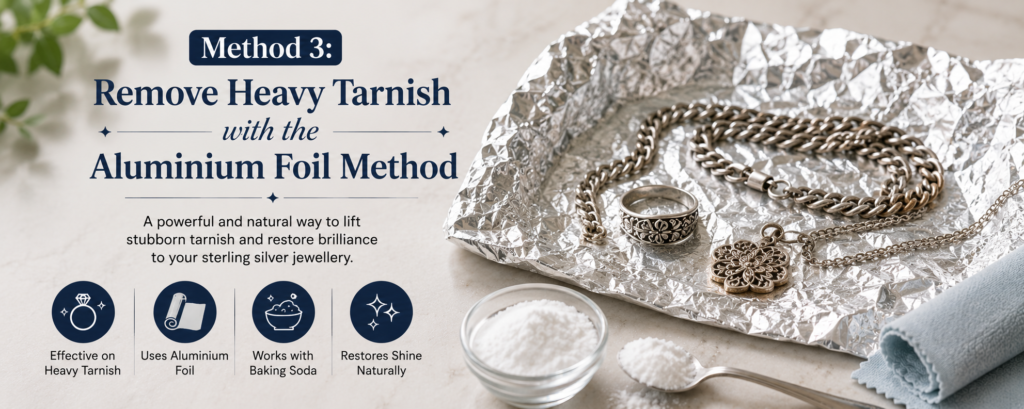
Method 3: Remove Heavy Tarnish with the Aluminium Foil Method
When regular cleaning methods aren’t enough, the aluminium foil method is an excellent way to remove heavy tarnish. Instead of scrubbing the surface, this technique uses a simple chemical reaction to lift tarnish from the silver, making it ideal for jewellery with detailed designs.
This method is particularly useful for silver chains, where tarnish and dirt can build up between the links and become difficult to remove with a cloth or toothbrush.
How to Use the Aluminium Foil Method
- Line a glass or ceramic bowl with aluminium foil, keeping the shiny side facing upwards.
- Place your jewellery directly on top of the foil.
- Pour enough boiling water into the bowl to completely cover the jewellery.
- Add one tablespoon of baking soda for every cup of hot water.
- Allow the solution to react for five to ten minutes while the tarnish transfers from the silver to the foil.
- Carefully remove the jewellery using tongs or a spoon.
- Rinse with clean water and dry thoroughly using a soft microfibre cloth.
Important Things to Remember
- This method is best suited for plain sterling silver with heavy tarnish.
- Avoid using it on jewellery with glued settings or delicate gemstones.
- If a piece has an antique or decorative finish, choose a gentler cleaning method instead.
- Always dry your jewellery completely before storing it to help reduce future tarnish.
Although this technique is highly effective, it isn’t something you’ll need to use often. Regular cleaning and proper storage will usually prevent heavy tarnish from developing in the first place.
How to Care for Different Types of Sterling Silver Jewellery
Although the same cleaning methods work for most sterling silver jewellery, each type deserves a little extra attention. The way you wear and store your jewellery can make a big difference in how well it retains its shine over time.
Rings
Rings are exposed to hand washing, sanitiser, lotions, and everyday activities more than any other jewellery. Remove them before cleaning, gardening, or lifting heavy objects, and clean them regularly to prevent dirt from collecting around stone settings and engraved details.
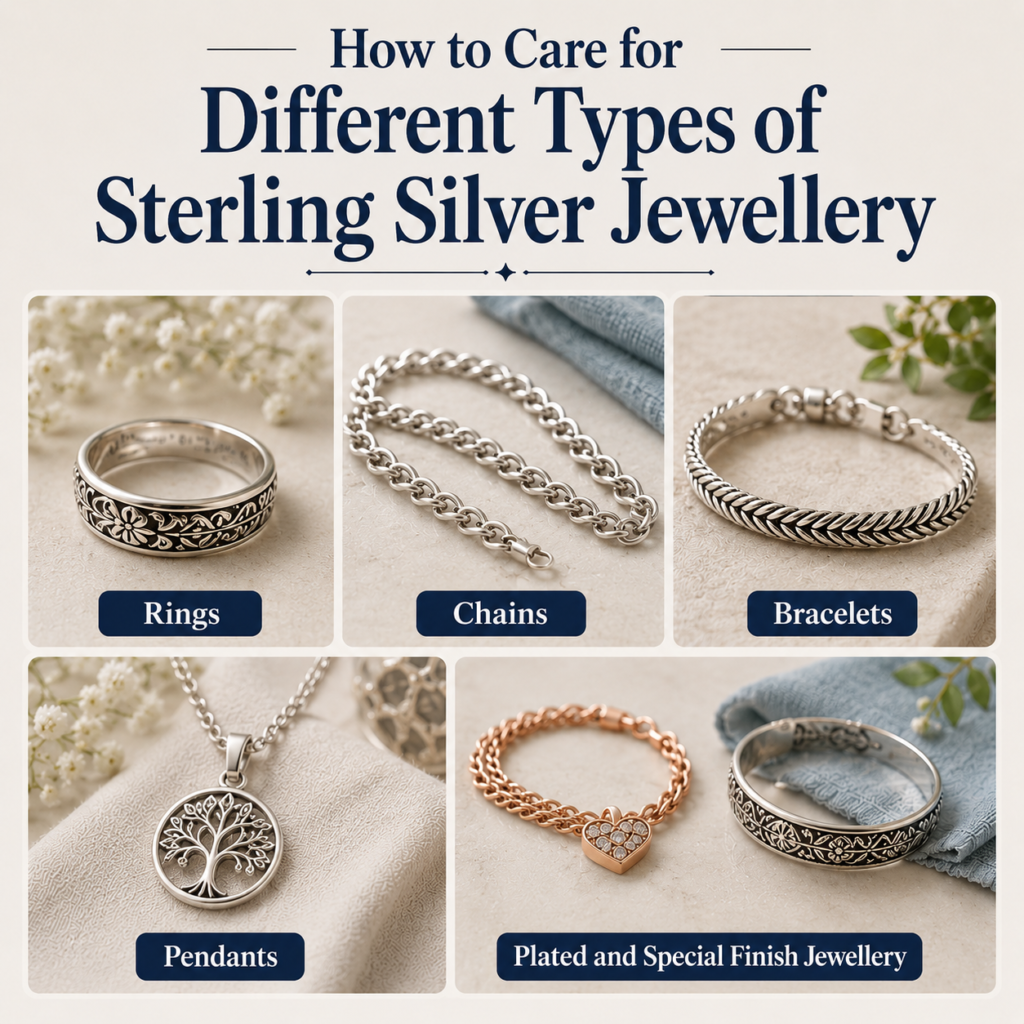
Chains
Chains naturally collect body oils and dust between their links. Wipe them gently with a soft cloth after wearing them and store them flat or hanging separately to prevent tangles and unnecessary wear.
Bracelets
Silver bracelets experience constant movement throughout the day, making them more likely to develop fine scratches. Remove them before exercising, swimming, or doing household chores, and polish them occasionally with a soft microfibre cloth to maintain their shine.
Pendants
If your silver pendants include gemstones or intricate designs, clean them gently using a soft brush and mild soapy water. Whenever possible, clean the pendant separately from its chain so you can reach every detail more effectively.
Plated and Special Finish Jewellery
Jewellery with plated or decorative finishes requires a gentler approach than plain sterling silver. Avoid abrasive cleaning methods, use only mild soap and warm water when needed, and always dry each piece thoroughly before storing it.
No matter which style you wear, regular care and proper storage will help preserve its appearance and allow you to enjoy your jewellery for many years.
Sterling Silver Care: Do’s and Don’ts
Taking care of sterling silver doesn’t have to be difficult. A few simple habits can help maintain its shine, reduce tarnish, and keep it looking beautiful for years. The table below highlights the best practices to follow and the mistakes you should avoid.
| Do’s | Don’ts |
|---|---|
| Clean your jewellery regularly using mild soap and warm water. | Don’t use bleach, ammonia, or harsh household cleaners. |
| Dry every piece completely before storing it. | Don’t put jewellery away while it’s still damp. |
| Store each piece separately in a soft pouch or jewellery box. | Don’t throw multiple pieces into the same drawer. |
| Use a soft microfibre cloth to remove fingerprints and everyday dirt. | Don’t use rough cloths, paper towels, or abrasive brushes. |
| Remove jewellery before swimming, exercising, or cleaning. | Don’t expose sterling silver to chlorine or strong chemicals. |
| Apply perfume, lotion, and hairspray before putting on your jewellery. | Don’t spray fragrances directly onto your jewellery. |
| Inspect clasps and settings regularly for signs of wear. | Don’t ignore loose stones or damaged clasps. |
Following these simple do’s and don’ts will help preserve the appearance of your jewellery while reducing the need for frequent deep cleaning. Small daily habits often make the biggest difference in keeping sterling silver looking its best.
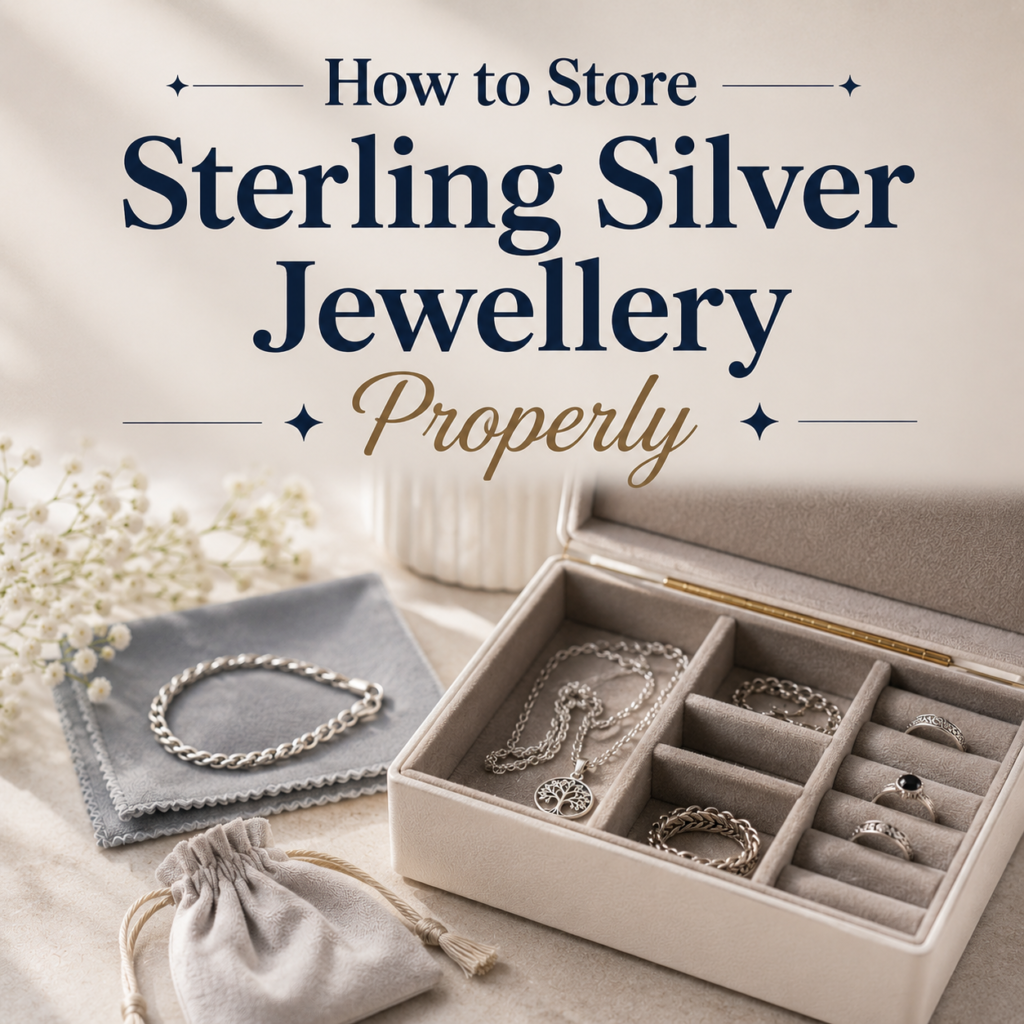
How to Store Sterling Silver Jewellery Properly
Cleaning your jewellery is only half the job. Proper storage plays an equally important role in preventing tarnish, reducing scratches, and preserving the shine of sterling silver. Even a well-cleaned piece can lose its brilliance if it’s stored in the wrong environment.
The best place to keep sterling silver is in a cool, dry location away from direct sunlight and humidity. Exposure to air and moisture speeds up oxidation, so storing your jewellery correctly can significantly reduce the need for frequent polishing.
Best Storage Practices
- Store each piece separately to prevent scratches and tangles.
- Use a jewellery box with individual compartments or soft fabric pouches.
- Keep silica gel packets or anti-tarnish strips inside your jewellery box to absorb excess moisture.
- Always make sure your jewellery is completely dry before putting it away.
- Avoid leaving jewellery near windows, radiators, or other sources of heat.
Where You Shouldn’t Store Your Jewellery
Many people keep their jewellery in the bathroom because it’s convenient, but it’s actually one of the worst places for sterling silver. Steam and constant humidity can accelerate tarnishing. A bedroom drawer or dedicated jewellery box is a much better choice.
Storage Tips for Special Finishes
If you own rose gold plated jewellery, store it separately from other metal pieces to help protect the plated finish from unnecessary friction and scratches. Using a soft pouch is one of the easiest ways to keep the surface looking its best.
Good storage habits take very little effort, but they can make a noticeable difference in the long-term appearance of your jewellery. Combined with regular cleaning, proper storage is one of the most effective ways to keep sterling silver looking beautiful for years.
Extra Tips to Keep Your Sterling Silver Jewellery Looking New
Regular cleaning and proper storage are the foundation of good jewellery care, but a few everyday habits can help keep sterling silver looking bright for even longer. These simple tips don’t take much time, yet they can make a noticeable difference in preserving your jewellery’s appearance.
Wear Your Jewellery the Right Way
Always put on your jewellery after applying perfume, moisturiser, sunscreen, or hairspray. This reduces direct contact with chemicals that can leave residue on the silver and contribute to tarnishing over time.
Wipe It After Every Wear
Before storing your jewellery, gently wipe it with a soft microfibre cloth. This quick step removes fingerprints, body oils, and dust, helping maintain its natural shine between cleanings.
Rotate Your Jewellery
If you wear jewellery every day, try alternating between different pieces instead of wearing the same one continuously. Rotating your collection helps minimise everyday wear and gives each piece a chance to rest between uses.
Avoid Unnecessary Exposure
Remove your jewellery before swimming, exercising, gardening, or using household cleaning products. Chlorine, sweat, and strong chemicals can all affect the finish and increase the likelihood of tarnish.
Know When Professional Cleaning Is Worth It
Most sterling silver jewellery can be cleaned safely at home. However, if a piece has intricate detailing, valuable gemstones, or heavy tarnish that doesn’t improve with gentle cleaning, professional polishing may be the safest option. A qualified jeweller can restore its shine while protecting delicate settings and finishes.
Building these simple habits into your routine will help keep your jewellery looking elegant year after year. Consistent care is often more effective than occasional deep cleaning and helps preserve both the beauty and durability of every piece.
Common Mistakes to Avoid When Cleaning Sterling Silver Jewellery
Cleaning sterling silver is straightforward, but using the wrong techniques can do more harm than good. Many people unknowingly damage their jewellery by following common myths or using harsh cleaning products. Avoiding these mistakes will help preserve the shine and extend the life of your jewellery.
Using Toothpaste as a Cleaner
Although toothpaste is often recommended as a DIY cleaning solution, it isn’t suitable for sterling silver. Most toothpastes contain abrasive ingredients that can leave fine scratches on the surface, making the jewellery lose its smooth finish over time.
Scrubbing Too Hard
Applying excessive pressure with a brush or cloth won’t remove tarnish more effectively. Instead, it can create tiny scratches that reduce the natural shine. Always clean using gentle, circular motions and let the cleaning solution do the work.
Leaving Jewellery Wet
Moisture is one of the main causes of tarnish. After washing your jewellery, dry it thoroughly with a soft cloth and allow it to air dry for a few minutes before storing it.
Using Harsh Household Chemicals
Bleach, ammonia, and other strong cleaning products can damage sterling silver and affect its finish. Stick to mild dish soap and warm water for routine cleaning, and only use stronger methods when necessary.
Wearing Jewellery During Everyday Activities
It’s best to remove your jewellery before swimming, exercising, gardening, or doing household chores. Sweat, chlorine, and cleaning chemicals can all contribute to tarnishing and unnecessary wear.
Ignoring Early Signs of Tarnish
Light tarnish is much easier to remove than heavy tarnish. Cleaning your jewellery as soon as you notice it becoming dull will usually require less effort and help maintain its original appearance.
By avoiding these common mistakes and following the care tips in this guide, you can keep your sterling silver jewellery looking polished, clean, and ready to wear for years to come.
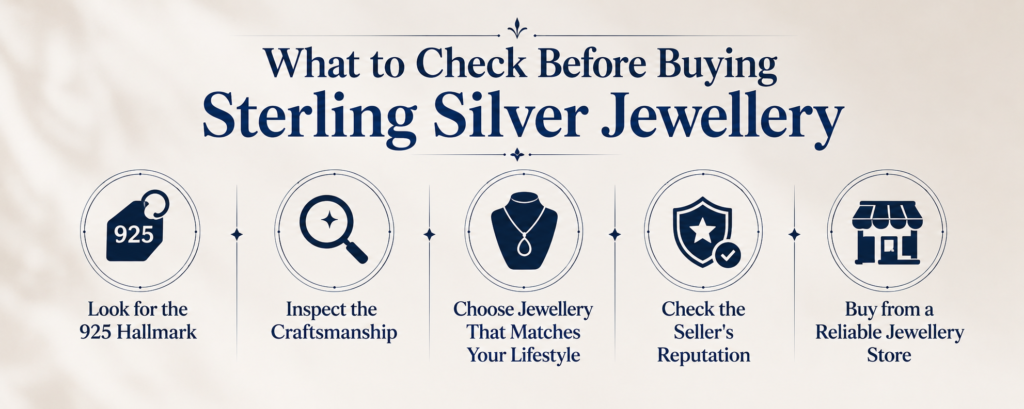
What to Check Before Buying Sterling Silver Jewellery
Buying sterling silver jewellery is an investment, so it’s worth taking a few minutes to check its quality before making a purchase. Whether you’re shopping for yourself or choosing a thoughtful gift, knowing what to look for can help you find jewellery that is both beautiful and long-lasting.
Look for the 925 Hallmark
Always check for the “925” hallmark. This stamp confirms that the jewellery is made from 92.5% pure silver, which is the recognised standard for genuine sterling silver. A clear hallmark is one of the easiest ways to identify authentic sterling silver jewellery.
Inspect the Craftsmanship
Take a close look at the overall finish. Quality jewellery should have a smooth surface, polished edges, and securely fitted clasps or stone settings. There shouldn’t be any rough spots, visible gaps, or loose components.
Choose Jewellery That Matches Your Lifestyle
If you plan to wear your jewellery every day, choose designs that are comfortable, durable, and easy to maintain. Simpler styles are often better suited for daily wear, while more intricate pieces may be ideal for special occasions.
Check the Seller’s Reputation
Buying from a trusted jewellery retailer gives you greater confidence in the authenticity and quality of your purchase. Reading customer reviews, checking product details, and understanding the return policy can help you make a more informed decision.
Buy from a Reliable Jewellery Store
When you’re ready to purchase genuine sterling silver jewellery, it’s always best to choose a reputable retailer that clearly describes its materials and craftsmanship. You can explore a wide range of authentic designs by visiting our Shop, where you’ll find jewellery created for everyday wear as well as special occasions.
Choosing high-quality sterling silver from a trusted source means you’ll enjoy jewellery that not only looks beautiful today but also remains a valued part of your collection for years to come.
Frequently Asked Questions
How often should I clean sterling silver jewellery?
If you wear your jewellery regularly, clean it every two to four weeks using mild soap and warm water. Wiping it with a soft microfibre cloth after each use will also help remove dirt and oils before tarnish develops.
Why does sterling silver turn black?
Sterling silver naturally reacts with sulfur, moisture, and oxygen in the air, causing a dark layer known as tarnish to form. This is a normal chemical reaction and doesn’t mean your jewellery is damaged or fake.
Can tarnished sterling silver become shiny again?
Yes. In most cases, tarnished sterling silver can be restored using gentle cleaning methods such as mild soap and warm water or, for heavier tarnish, a baking soda paste or the aluminium foil method.
Can I wear sterling silver jewellery every day?
Yes. Sterling silver is designed for everyday wear. Regular use won’t damage it, provided you clean it periodically and avoid unnecessary exposure to harsh chemicals, chlorine, and excessive moisture.
Is it safe to wear sterling silver in the shower?
Occasional contact with water is usually fine, but repeated exposure to soap, shampoo, and hard water may speed up tarnishing. Removing your jewellery before showering will help preserve its shine.
Can I clean sterling silver with toothpaste?
No. Toothpaste often contains abrasive ingredients that can scratch the surface of sterling silver. It’s safer to use cleaning methods specifically recommended for silver jewellery.
How should I clean sterling silver jewellery with gemstones?
Use mild soap, warm water, and a soft cloth or soft-bristled toothbrush. Avoid soaking delicate gemstones for long periods, and never use harsh cleaning products unless recommended by a professional jeweller.
Does sterling silver rust?
No. Sterling silver does not rust because it doesn’t contain iron. Instead, it develops tarnish on the surface, which can usually be removed with proper cleaning.
How can I tell if sterling silver is genuine?
Look for the “925” hallmark, which indicates the jewellery contains 92.5% pure silver. Purchasing from a trusted retailer is also one of the best ways to ensure you’re buying genuine sterling silver.
How long does sterling silver jewellery last?
With regular cleaning and proper storage, sterling silver jewellery can last for decades. Its durability and timeless appearance make it a popular choice for everyday wear and special occasions alike.
Final Thoughts
Keeping your sterling silver jewellery looking beautiful doesn’t require expensive products or complicated techniques. With regular cleaning, proper storage, and a few simple daily habits, you can prevent tarnish and maintain its natural shine for years to come.
Whether your jewellery is part of your everyday style or reserved for special occasions, taking a little extra care will help preserve its appearance and extend its lifespan. Small steps such as cleaning away dirt, avoiding harsh chemicals, and storing each piece correctly can make a noticeable difference over time.
We hope this guide has given you the confidence to clean and care for your sterling silver jewellery at home. By following these practical tips, you can keep every piece looking as elegant as the day you bought it and enjoy wearing it for many years ahead.
