
Styling Tips
How to Tell If Silver Is Real Using Simple Tests at Home
Jun
How to Tell If Silver Is Real Using Simple Tests at Home
Buying silver jewellery is exciting, whether it is for a festival, a family celebration, a birthday gift, or simply a personal purchase. However, one question often comes to mind before completing the purchase: Is this silver genuine? With imitation jewellery becoming more common, it is natural to feel uncertain, especially when buying from an unfamiliar seller or choosing a second-hand piece.
The good news is that checking silver authenticity does not always require expensive tools or professional equipment. Several safe and simple methods can help identify whether a piece is likely to be genuine. Although these home tests cannot replace professional verification, they offer a practical way to spot obvious signs of fake silver.
This guide explains how to tell if silver is real using easy tests that anyone can perform at home. It also covers the difference between sterling silver, pure silver, and silver-plated jewellery, helping shoppers make more informed buying decisions.
What Does “Real Silver” Actually Mean?
Before trying any home test, it helps to understand what “real silver” actually refers to. Many people assume every silver coloured piece is made from genuine silver, but that is not always the case.
925 Sterling Silver
Most high quality jewellery is made from 925 sterling silver. It contains 92.5% pure silver and 7.5% other metals, usually copper. This combination improves durability while preserving silver’s natural shine, making it suitable for everyday jewellery.
If searching for authentic sterling silver jewellery, explore the Silver Rings collection, where every piece is crafted from certified 925 sterling silver.
Pure Silver (999 Silver)
Pure silver contains almost 99.9% silver. Although it is more valuable in terms of silver content, it is also much softer. Because it bends and scratches easily, pure silver is usually used for coins, investment bars, idols, or decorative items rather than jewellery worn every day.
Silver Plated Jewellery
Silver plated jewellery has only a thin coating of silver over another metal such as brass, copper, or steel. It may look similar to sterling silver at first, but the coating gradually wears away with regular use.
Fake Silver or Metal Alloys
Some jewellery contains no real silver at all. Manufacturers often use inexpensive metals with a shiny finish to imitate genuine silver. These pieces are generally lighter, tarnish differently, and may lose their appearance after only a short period.
Why Hallmarks Matter
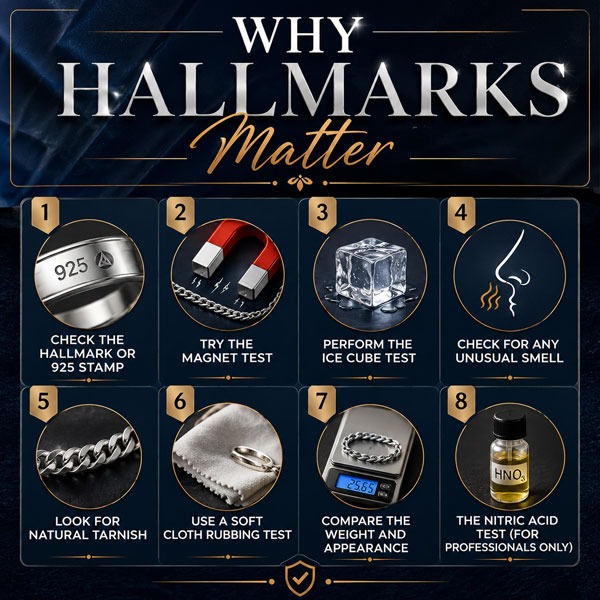
One of the easiest ways to begin checking silver is by looking for a hallmark. Genuine sterling silver jewellery usually carries a small stamp such as 925, Sterling, or a recognised hallmark that confirms its silver content.
In India, BIS hallmarking has become an important sign of authenticity. Purchasing jewellery that carries the appropriate hallmark from a trusted seller greatly reduces the chances of ending up with imitation silver.
1. Check the Hallmark or 925 Stamp
The hallmark test should always be the first step before trying anything else. Use a magnifying glass or simply examine the jewellery carefully under good lighting. Rings often have the stamp inside the band, while chains, pendants, and bracelets usually have it near the clasp.
If the jewellery clearly displays a 925 stamp or an appropriate BIS hallmark, it is a strong indication that the piece is genuine sterling silver. However, fake products sometimes copy these markings, so combining this check with a few additional tests provides greater confidence.
2. Try the Magnet Test
The magnet test is one of the quickest ways to check silver at home. Genuine silver is not magnetic, so it should not stick to a strong magnet. A small refrigerator magnet is usually too weak, so use a powerful neodymium magnet if available.
If the jewellery is strongly attracted to the magnet, it is likely made from another metal rather than sterling silver. However, if there is little or no attraction, the piece may be genuine. Since some non-silver metals are also non-magnetic, this test should be used along with other methods.
3. Perform the Ice Cube Test
Silver is one of the best conductors of heat. Because of this, it transfers heat much faster than most other metals.
Place an ice cube directly on the jewellery and watch what happens. If the ice starts melting noticeably faster than it would on a regular metal surface, the jewellery is likely made from real silver. Although this test is simple, it works best on larger pieces such as a bracelet or chain.
If looking for jewellery that combines beauty with genuine 925 sterling silver quality, browse the Silver Bracelets collection for certified designs suitable for everyday wear.
4. Check for Any Unusual Smell
Real sterling silver has almost no noticeable smell. Pick up the jewellery and gently rub it between clean fingers before smelling it.
If a strong metallic, copper-like, or rusty odour is noticeable, the jewellery may contain a large amount of other metals instead of genuine silver. A neutral smell is generally a positive sign, although it should never be the only factor used to judge authenticity.
5. Look for Natural Tarnish
Many people believe tarnish means silver is fake, but the opposite is often true. Genuine sterling silver naturally reacts with sulphur in the air and slowly develops a darker layer over time.
If an older piece has light black or grey tarnish that can be cleaned with a soft silver polishing cloth, it is usually a good indication of real silver. On the other hand, if the jewellery starts peeling, exposing a different coloured metal underneath, it is most likely silver plated.
6. Use a Soft Cloth Rubbing Test
Take a clean white cotton cloth and gently rub the jewellery for a few seconds. This simple method can reveal how the surface reacts.
If faint black marks appear on the cloth, it usually indicates natural silver tarnish, which is common with genuine sterling silver. If the finish begins to chip, fade, or reveal another metal underneath, the jewellery is unlikely to be solid silver.
Authentic sterling silver develops a beautiful natural patina over time without losing its value. Collections such as Silver Pendants are crafted to maintain their shine with proper care while preserving the characteristics of genuine 925 sterling silver.
7. Compare the Weight and Appearance
Genuine sterling silver feels solid and well made. Even smaller pieces usually have a noticeable weight because silver is denser than many metals used in imitation jewellery.
Hold the jewellery in your hand and examine it carefully under natural light. Real silver has a soft, bright shine rather than an overly glossy finish. If the piece feels unusually light, has rough edges, or the colour appears uneven, it may not be genuine sterling silver.
< p> Well-crafted pieces, such as certified Silver Chains, generally have a smooth finish, balanced weight, and consistent colour throughout the jewellery.
8. The Nitric Acid Test (For Professionals Only)
The nitric acid test is one of the most reliable methods for checking silver purity. However, it should only be carried out by a trained jeweller because nitric acid is highly corrosive and can cause serious injuries if handled incorrectly.
During this test, a tiny drop of nitric acid is applied to a small area of the jewellery. Genuine sterling silver reacts differently from base metals, helping professionals determine whether the piece is authentic. For safety reasons, this method is not recommended as a home test.
Can One Test Confirm Real Silver?
No single home test can guarantee that silver is genuine. Each method provides only one clue, and some fake jewellery can pass one or two tests while still being made from inexpensive alloys.
For the most reliable results, combine several checks. Look for the 925 hallmark, perform the magnet test, observe natural tarnish, check the weight, and inspect the overall finish. When multiple tests point to the same conclusion, the chances of the jewellery being genuine are much higher.
When Should a Professional Check Be Considered?
Home tests are useful for everyday purchases, but valuable jewellery deserves professional verification. Family heirlooms, vintage collections, expensive gifts, and antique pieces should always be examined by a qualified jeweller before selling, insuring, or restoring them.
A professional can accurately verify silver purity using specialised equipment without damaging the jewellery. This is especially important when the piece has sentimental or financial value.
For jewellery purchased as a gift, choosing certified collections from the beginning makes the buying process much simpler. Whether searching for thoughtful Gifts for Him or elegant Gifts for Her, selecting authentic 925 sterling silver removes the uncertainty about quality and purity.
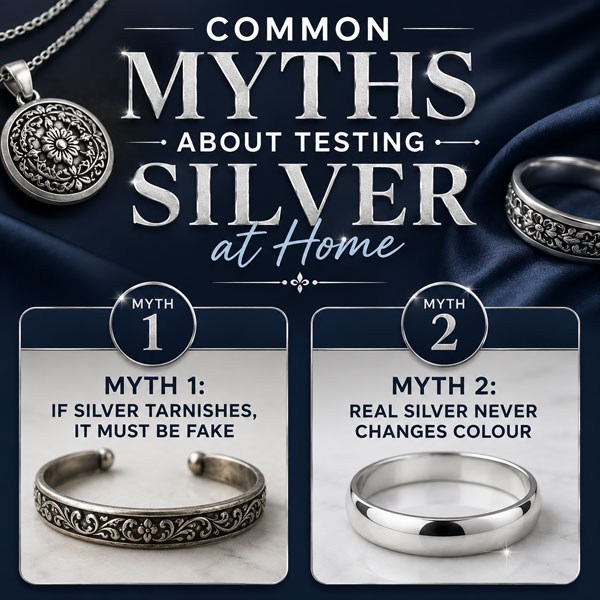
Common Myths About Testing Silver at Home
There are plenty of misconceptions about identifying genuine silver. While some home tests are useful, others can easily lead to the wrong conclusion.
Myth 1: If Silver Tarnishes, It Must Be Fake
This is one of the most common myths. Genuine 925 sterling silver naturally develops tarnish when it reacts with moisture and sulphur in the air. A quick clean with a silver polishing cloth usually restores its original shine.
Myth 2: Real Silver Never Changes Colour
Real silver can lose its shine over time, especially in humid conditions or if it comes into contact with perfumes, lotions, or household chemicals. A slight change in appearance is normal and does not mean the jewellery is fake.
Why Buying from a Trusted Seller Makes All the Difference
Home tests are helpful, but they cannot guarantee authenticity in every situation. The safest option is always to purchase jewellery from a trusted brand that offers certified 925 sterling silver and clear product information.
Shopping from a reliable source also provides peace of mind about quality, craftsmanship, and long-term value. Instead of relying on multiple home tests after purchasing, buyers can choose jewellery that has already been verified for authenticity.
Explore the complete Shop to discover certified 925 sterling silver jewellery designed for everyday wear, special occasions, and meaningful gifts.
Frequently Asked Questions
1. How can real silver be identified at home?
Checking the 925 hallmark, using the magnet test, trying the ice cube test, and looking for natural tarnish are some of the easiest ways to identify genuine silver at home.
2. Does a magnet stick to real silver?
No. Sterling silver is not magnetic. If jewellery strongly sticks to a powerful magnet, it is likely made from another metal.
3. Is tarnished silver fake?
No. Genuine sterling silver naturally tarnishes over time. In fact, light tarnish is often a sign that the jewellery contains real silver.
4. What does the 925 stamp mean?
The 925 stamp indicates that the jewellery contains 92.5% pure silver and 7.5% other metals, making it genuine sterling silver.
5. Can fake jewellery also have a 925 stamp?
Yes. Some imitation jewellery carries fake stamps. That is why it is important to combine the hallmark check with other tests or purchase from a trusted seller.
6. Is the nitric acid test safe to perform at home?
No. Nitric acid is a hazardous chemical and should only be used by trained professionals using proper safety equipment.
7. Does real silver have a smell?
Genuine sterling silver has little to no smell. A strong metallic or copper-like odour may indicate that the jewellery contains other metals.
8. Where can genuine 925 sterling silver jewellery be purchased in India?
Buying from a trusted brand that offers certified 925 sterling silver and transparent product information is the safest option. Current Offers also make it easier to purchase authentic silver jewellery at great value.
Final Thoughts
Knowing how to tell if silver is real can help avoid disappointment and unnecessary expense. Simple checks such as looking for the 925 hallmark, trying the magnet test, observing natural tarnish, and performing the ice cube test provide useful clues about a piece’s authenticity. Using several methods together gives a more reliable result than depending on a single test.
For complete confidence, choose jewellery from a trusted seller that specialises in certified 925 sterling silver. Browse the latest New Arrivals or explore the most loved designs in the Best Sellers collection to find genuine silver jewellery crafted to last.
